Funding the Relationship: Why Partnership Work Needs Its Own Budget Line

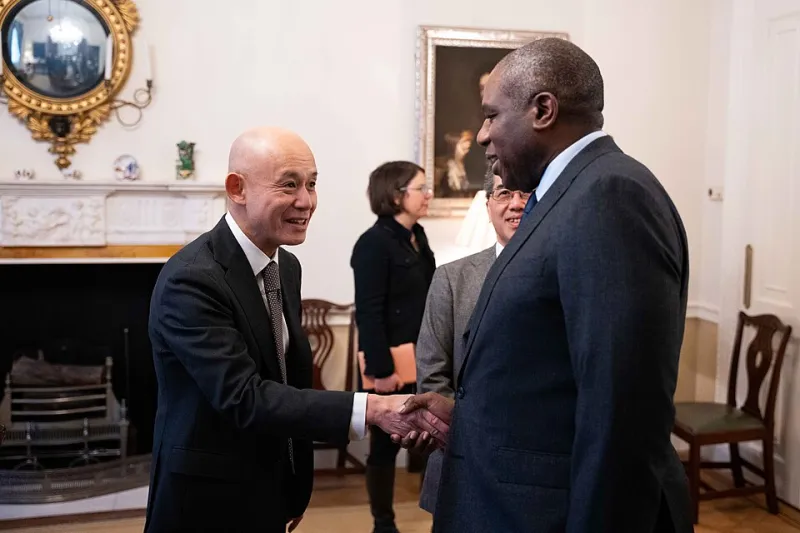
Partnerships rarely fail in public. They erode in the gaps between meetings, in the unpaid hours spent chasing signatures, and in the assumptions that someone else is covering the governance. For many UK organisations, collaboration is still treated as a free by-product of goodwill. A handshake at a networking event becomes a consortium; a shared ambition becomes a joint bid; and the work of sustaining the relationship is absorbed by whoever happens to have capacity. That is not a partnership strategy. It is an unfunded liability.
The invisible cost of collaboration
Every partnership has running costs. They are simply easier to see when they appear on an invoice. Relationship management takes time: stakeholder mapping, regular contact, issue resolution and the patient work of keeping trust intact across organisational boundaries. Governance takes time: papers, minutes, decisions, assurance, conflict-of-interest checks and the careful handling of data. Joint bids take time: drafting, pricing, legal review, consortium agreements and mobilisation planning. None of this happens by accident, and none of it is free.
In UK public sector and consortium settings, the pressure is particularly acute. Commissioning cycles are competitive, assurance requirements are detailed, and partners often bring different accounting years, risk appetites and reporting lines. A local authority, an NHS body, a voluntary sector provider and a private contractor may share an outcome but not a budget code. When partnership work is not explicitly funded, it is quietly pushed onto individuals who are already busy. The result is predictable: slower decisions, weaker bids, missed deadlines and a relationship that survives on goodwill until goodwill runs out.
Where the money actually goes
A realistic partnership budget has four components.
First, relationship management. This is not a vague overhead. It needs a named lead, agreed time allocation and a simple contact plan. It may include travel across regions, briefing materials, partner events and the use of customer relationship management tools. In a consortium, it should also include time for partner-to-partner coordination, not just coordination with the lead organisation.
Second, governance. Boards and steering groups need secretariat support, clear terms of reference and enough analytical capacity to test performance. Assurance is not a by-product of a quarterly meeting. It requires risk registers, performance dashboards, financial monitoring and a route for escalation when partners disagree. Legal and compliance input may also be needed for data sharing, procurement and subsidy control.
Third, joint bid and delivery costs. A bid is a project in its own right. It needs bid management, solution design, pricing, legal review and a consortium agreement that sets out liabilities and exit arrangements. If the bid succeeds, mobilisation costs follow: induction, systems access, training and service transition. If it fails, the cost does not disappear. A budget that only funds success is not a budget; it is a hope.
Fourth, learning and exit. Partnerships need time to evaluate what worked, capture knowledge and close down activities cleanly. This is especially important in time-limited programmes and consortium arrangements. Without it, partners repeat the same mistakes and carry unresolved obligations into the next venture.
A budget model that survives finance scrutiny
Finance teams are not unreasonable to ask what a partnership budget buys. The answer should be specific. A useful model separates the core partnership function from deal-specific costs and contingency.
The core function covers the baseline capacity needed to sustain collaboration: partnership lead time, secretariat support, governance meetings, stakeholder engagement and performance reporting. It should be funded even when no bid is live, because relationships decay when they are only activated for procurement.
Deal-specific costs are attached to a particular opportunity or programme: bid development, legal agreements, mobilisation, evaluation and wind-down. These should be estimated at the outset and reviewed at decision points. They should not be buried in general overheads.
Contingency recognises that partnerships encounter friction. Partners change personnel, priorities shift and assurance questions emerge. A modest contingency is not a slush fund. It is a recognition that collaboration involves coordination costs which are difficult to predict precisely.
The budget should also show the value at risk. If a partnership supports a contract, a service improvement or a shared commitment, what would it cost to lose it? Framing the budget against the cost of failure is often more persuasive than framing it as an administrative extra.
The board conversation
Boards have a role in making partnership funding visible. They should ask whether the organisation has the capacity to deliver the relationships it has signed up to, not just whether the legal agreement is in place. They should scrutinise partnership business cases for resource assumptions: who is doing the coordination, how much time is allocated, and what happens when a partner underperforms.
This is not about adding bureaucracy. It is about matching ambition to capacity. A partnership that is funded properly is more likely to deliver, more likely to evidence its value and more likely to end well if it needs to. A partnership that is funded informally may look efficient in the short term, but it stores up risk in the relationships that hold it together.
Fund the work, not just the ambition
The strongest partnerships are not the ones with the longest memoranda. They are the ones where the work of collaboration is recognised, resourced and reviewed. In 2026, with public services under pressure and expectations of collaboration high, treating partnership working as a free good is a false economy. Collaboration deserves a budget line because it is a business activity. The handshake may start the relationship, but the budget is what keeps it honest.